
Every year on Memorial Day, thousands of people — from CrossFit boxes to backyard bootcamps — line up to do the same brutal routine. It’s called “Murph”: a one-mile run, 100 pull-ups, 200 push-ups, 300 air squats, and another one-mile run, traditionally done while wearing a 20-lb weighted vest (14 lb for women). The workout doubles as a memorial: it honors Navy Lieutenant Michael P. Murphy, a SEAL who was posthumously awarded the Medal of Honor after his actions in Afghanistan in 2005. What began as a personal training challenge among teammates has become a global fitness ritual — and for good reasons: Murph is a full-body, high-intensity calisthenics session that builds strength, boosts endurance, and can be an effective tool for fat loss when used sensibly. (The Murph Challenge 2025)

Below I’ll walk through the history and structure of Murph, explain the science behind why it works for weight loss and strength, show you how to scale it safely, and give practical programming & recovery tips so you can get the benefits without breaking yourself.
A Short History: From SEAL Training To a Memorial Day Tradition
Lt. Michael P. Murphy used demanding physical training to prepare for the rigors of SEAL life. The workout we now call Murph reportedly started as a challenge among Murphy and his teammates — simple, brutal, and repeatable. After his death in 2005, the workout became a way to honor his memory; it migrated into CrossFit programming and then into mainstream fitness culture, where groups gather on Memorial Day to complete the WOD in his honor. Today, organized Murph events and community challenges take place worldwide. (The Murph Challenge 2025)
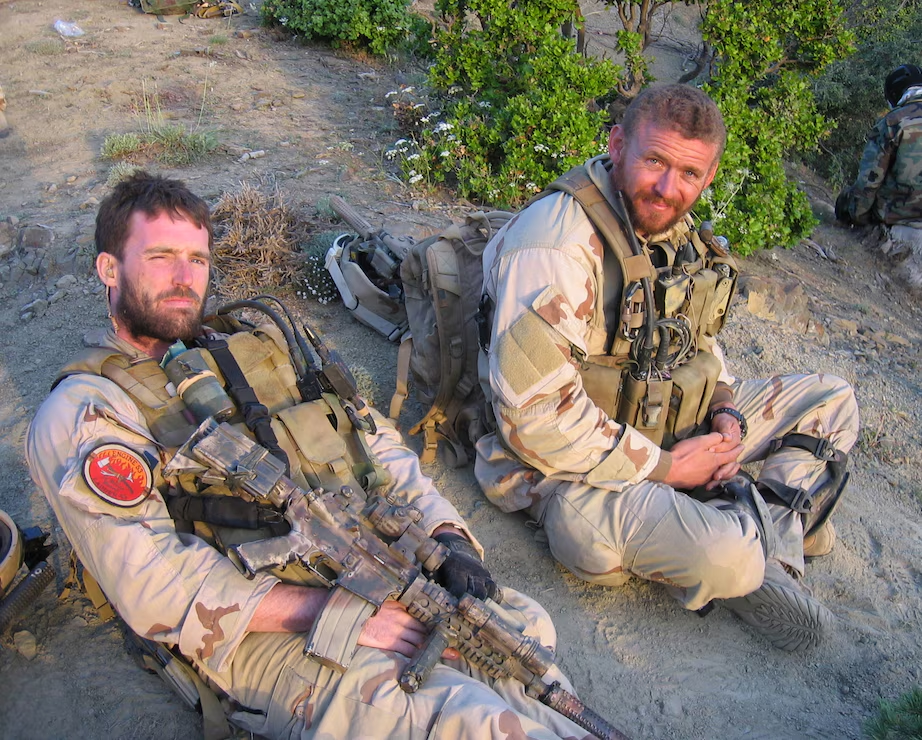
That combination of a tough, repeatable template plus a powerful backstory is a big reason Murph has stuck around: it’s both meaningful and measurable — you can time yourself, scale the reps, and try to get better each year.
What Exactly Is The Murph?
As commonly prescribed:
- 1-mile run
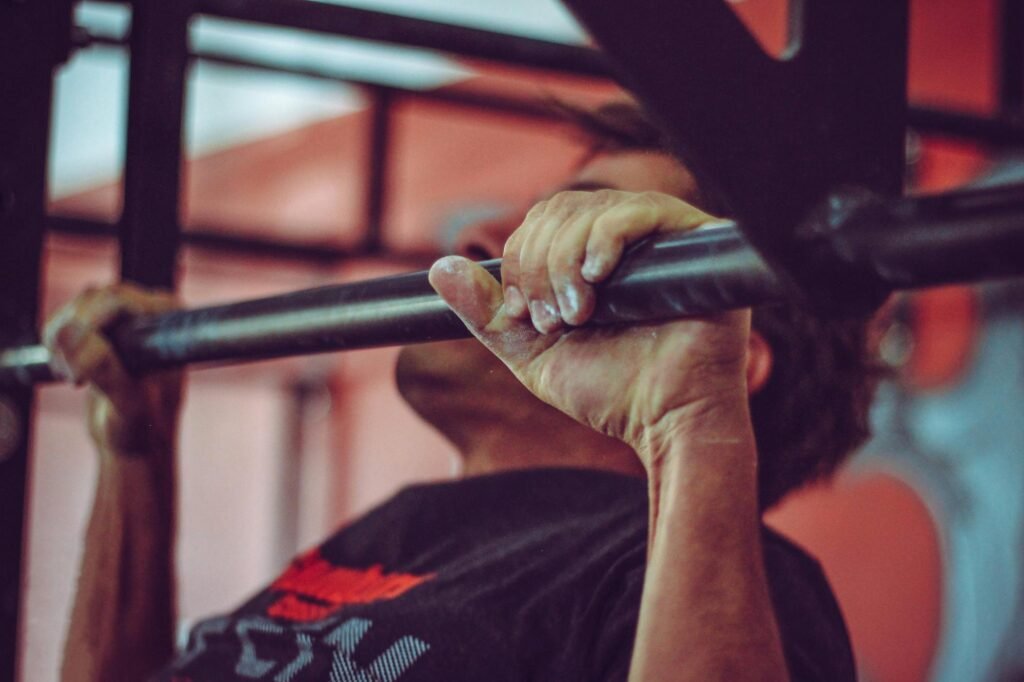
- 100 pull-ups
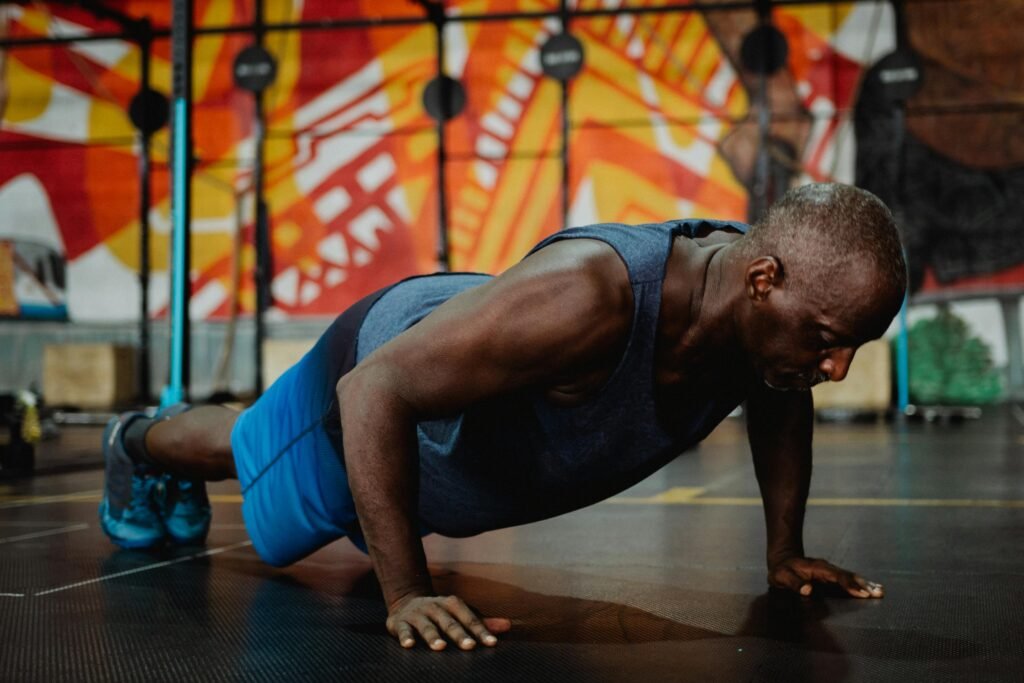
- 200 push-ups
- 300 air squats
- 1-mile run
- Optional: wear a 20-lb weight vest (men) / 14-lb (women)
The traditional method is “for time,” but most athletes partition the pull-ups, push-ups, and squats (for example: 20 rounds of 5 pull-ups, 10 push-ups, 15 squats) to manage fatigue and maintain consistent movement quality. Unpartitioned (doing all 100 pull-ups straight) is extremely demanding and not recommended for most people unless you have elite endurance and strength. (CrossFit)
Why Murph Is So Effective?
1) Full-body, compound movement volume builds real strength and endurance
Murph’s core movements — pull-ups, push-ups, and squats — are compound, multi-joint exercises that recruit large muscle groups and demand muscular endurance. Repeated high-volume calisthenics improves both strength endurance and the neural control required for efficient movement, and progressive versions of these exercises (more reps, added load, harder progressions) lead to muscle adaptation. Clinical and exercise science reviews show that structured bodyweight programs reliably increase muscular strength and endurance. (ResearchGate)
2) High intensity + sustained work = strong calorie burn and metabolic aftereffects
Murph blends cardio (running) with long, relatively high-intensity calisthenics. High-intensity intervals and circuit-style resistance sessions are associated with elevated excess post-exercise oxygen consumption (EPOC) — the brief metabolic “afterburn” where your body uses more oxygen and burns extra calories during recovery. Reviews and controlled studies indicate HIIT and circuit resistance formats can produce larger short-term EPOC than steady-state cardio, which helps increase total energy expenditure from a single session. In practical terms, a well-executed Murph can burn substantial calories during and after the workout, aiding fat loss when combined with proper nutrition and recovery. (Nature)
3) Weighted vest increases physiological demand (and calorie cost)
Performing Murph with a weight vest isn’t just symbolism — the extra load raises cardiovascular and metabolic stress, leading to higher energy expenditure and greater mechanical stimulus to build strength and resilience. Randomized trials on CrossFit-style weighted vest use show increased physiological stress and carbohydrate oxidation compared to non-weighted conditions, which explains why the vest makes Murph noticeably harder. That said, the vest also increases injury risk and recovery needs, so it should be introduced carefully. (PubMed)
Murph And Weight Loss: What To Expect (Realistically)
Murph is an efficient, high-effort session that can accelerate calorie burn and metabolic rate, which makes it useful for losing weight — but it’s not a magic bullet. Here’s a realistic framework:
- A single Murph (depending on pace, breaks, fitness level, and whether you wear a vest) can burn several hundred calories during the workout, plus additional calories from EPOC. Exact numbers vary widely by body size and intensity, so use calorie calculators or a heart-rate monitor for personalized estimates. (Calculator.net)
- Fat loss requires a sustained calorie deficit. Doing Murph regularly (for example, once a week) combined with two to three strength/cardio hybrid sessions and a sensible diet will produce measurable body composition changes over weeks to months.
- Because Murph is very glycolytic (carb-burning) and high volume, recovery nutrition (protein + carbs) and sleep are crucial to preserve muscle while losing fat.

In short: Murph helps create the high energy deficit and metabolic stimulus conducive to fat loss — especially when combined with consistent training and sound nutrition.
Strength And Conditioning Benefits (Beyond Losing Weight)
Murph improves:
- Muscular endurance in pulling, pushing, and squatting patterns.
- Aerobic capacity from the runs and sustained effort.
- Movement efficiency and core stability from repeated compound work.
- Mental toughness — long, repetitive sets teach pacing and grit.
Plus, because it’s bodyweight-centric, Murph builds functional strength — usable force in real movements — not just isolated muscle size. Studies comparing progressive calisthenics to traditional lifts show calisthenic progressions can produce comparable strength and hypertrophy gains for many populations when volume and intensity are managed. (PubMed)
How To Scale Murph (Beginner → Advanced)
Murph is infinitely scalable. Pick the level that lets you move consistently with good form.
Beginner (new to pull-ups/volume)
- Run/walk 1 mile or 1.5 miles as needed.
- Reduce reps: 50 pull-ups / 100 push-ups / 150 squats (or 50/100/150 partitioned).
- Use bands or assisted pull-up machine; perform knee or incline push-ups.
- No weight vest.
Intermediate (comfortable with bodyweight work)
- Full rep scheme (100/200/300) but partition: e.g., 20 rounds of 5/10/15.
- Strict pull-ups or kipping if trained.
- Optional lightweight vest or plate-loaded vest later in progression.
Advanced (experienced, strong)
- Unpartitioned or minimal breaks; add 20-lb (male) or 14-lb (female) vest for challenge.
- Try negative-heavy pull-ups, weighted pull-ups, or muscle-up substitutions if strength allows.
Partitioning strategies (e.g., 5/10/15 x 20 rounds; 10/20/30 x 10 rounds) help you keep rep intensity consistent and avoid catastrophic failure early in the workout. For most athletes, partitioning produces faster, safer times than doing each movement unbroken. (WODwell)
A Sample 8-week Murph Prep Plan (2 Sessions/Week + Auxiliary Work)
Week structure (example):
- Session A (Murph practice): Work up to doing full partitioned Murph by week 6. Start with reduced reps and add volume each week.
- Session B (strength + conditioning): Squat pattern, pull-up strength (weighted or banded), push-up progressions, and a 20–30 minute conditioning finisher (intervals or tempo run).
Include mobility, foam rolling, and 2 full rest days weekly. Emphasize sleep and protein (0.7–1.0 g/lb bodyweight daily) for recovery.
Safety, Common mistakes, And How To Avoid Injury
Murph is awesome — but it’s also risky if you ignore recovery, nutrition, or your current capacity. A few cautions:
- Don’t start heavy: adding a 20-lb vest to an untrained Murph can dramatically increase risk of overuse injury and metabolic stress. Progressive overload matters. (PubMed)
- Watch for rhabdomyolysis: extreme exertion in unaccustomed athletes can cause muscle breakdown (rhabdo). High-profile cases exist of competitors hospitalized after attempting Murph at maximal intensity without proper prep. If you experience severe muscle pain, dark urine, dizziness, or extreme swelling, seek medical attention. (People.com)
- Don’t sprint the first mile: going out too fast burns glycogen and accelerates fatigue for the calisthenics portion. Pacing and consistent rep schemes win.
- Prioritize movement quality: fast sloppy push-ups or half squats create strain and limit benefit. Break reps earlier if form suffers.
- Refuel and sleep: neglecting calories and sleep will blunt adaptation and increase injury risk.
Practical Tips For Race Day (Or Memorial Day Murph)
- Warm up thoroughly: dynamic drills, light runs, banded pull-up prep, scapular activation.
- Partition early: choose a scheme you know you can sustain.
- Use chalk and tape as needed for grips and skin protection.
- Hydrate but don’t overdrink right before the runs.
- If you wear a vest, do a few shorter vest sessions beforehand so your body adapts.
- Have a plan for the last mile — many people save energy to finish strong.

Final Thoughts: Why Murph Matters Beyond Fitness
Murph is more than a brutal workout. It’s an annual reminder — a fitness ritual that pairs physical challenge with remembrance. It teaches discipline, highlights community (most Murphs are group events), and offers a measurable way to get stronger and leaner. When approached intelligently — scaled to your level, supported by good nutrition and recovery, and treated with respect — Murph is an efficient, meaningful, and effective tool in your training toolbox. (The Murph Challenge 2025)
References & Further Reading (Key Sources)
- CrossFit: Murph Hero Workout (description of structure and scaling). (CrossFit)
- The Murph Challenge / LT. Michael P. Murphy memorial information. (The Murph Challenge 2025)
- Gaffney CJ et al., randomized trial on weighted-vest CrossFit training (physiological stress and carbohydrate oxidation). (PubMed)
- Reviews and studies on HIIT and EPOC showing greater post-exercise oxygen consumption for high-intensity protocols. (Nature)
- Health/academic reviews on calisthenics and bodyweight training benefits. (Harvard Health)
- News coverage and case report-style coverage of rhabdomyolysis after extreme exertion (cautionary example). (People.com)