
Introduction
Fitness challenges have been steadily rising in popularity — and in 2025 they’re evolving. We’re seeing more than just “do 30 push-ups for 30 days.” The latest iterations bring in tech, community support, hybrid workouts, even recovery-focused formats. But they’re not magic. Challenges can be motivating, but they can also backfire if you pick one that doesn’t fit your level, schedule or health. In this post we’ll dig into what makes a good challenge (and what to watch out for), explore several of the best formats you might try, and give real advice based on actual user experiences. No sugar-coating.

1. What Makes a Good Fitness Challenge in 2025
Before committing, ask: What am I really getting myself into? A good challenge in 2025 typically checks these boxes:
- Clear timeframe and goal: e.g., “30 days of doing X”, “six-week finish line”, or “eight weeks to step up your mobility”.
- Measurable progression: It’s not just “do something every day”; it evolves so you get stronger/fitter.
- Community or accountability built-in: Challenges with others (friends, online, teams) tend to have better adherence. For example, gamified walking-challenges increased activity by ~23% in one study.
- Adaptability: They should have options for different fitness levels and allow for rest/modifications.
- Recovery & sustainability: The best challenges don’t blow you up in week 1 and leave you injured or burnt out in week 3.
Emerging trends in 2025 include hybrid workouts (strength + mobility + cardio), tech/personalisation (wearables + app-based challenges), and lower-impact or recovery-centric formats for people who don’t want or need brute-force.

What to watch out for (real caution signs):
- Generic online challenges that don’t adapt to your level. One article warns: “lack of personalisation … risk of injury … incorrect form.” (totalfitnessmanual.com)
- Short-term “challenge hype” that ends and you revert to old habits. For example, critics of the program 75 Hard say the extreme nature makes maintenance very hard. (EatingWell)
- Hidden sales tactics or “challenge programmes” that feel more like a marketing funnel than a real fitness path. For example one person described a “free fitness challenge” that turned into a high-pressure gym sales pitch. (Financegeek)
- Overly rigid rules that don’t allow for life interruptions (travel, sickness, work) — which makes failure more likely.
The takeaway: A challenge can be a great tool if you pick one that matches your level + lifestyle, and you go into it aware of trade-offs.
2. Top Fitness Challenge Formats to Try (with Realistic Advice)
Here are five popular formats for 2025 — with what’s good, what’s real, and who each is best for.
2.1 Classic Multi-Week Challenge (e.g., 30-day core, progressive plank)
What it is: You commit to doing a specific workout (or small set) each day for a set number of days — often 30 days. It might ramp up: day 1 = 30 sec plank, day 30 = 5 min plank, etc.
Why it works: Simple structure, daily habit-forming, clear start/end.
Who it’s good for: Beginners, people looking for momentum, or those who benefit from a daily micro-goal.
How to get started: Pick a baseline you can do, map out increments, schedule it (e.g., right after waking up). Track your progress visually (check-off list, photo, log).
Real-life review / caveat: One blogger who tried a 30-day workout+meal challenge said:
“This was one of the hardest health and fitness workouts I’ve come across to date; it not only challenged me physically, but also mentally.” (simplyeseeri.com)
So yes — even “30 days” is not trivial. You’ll need discipline and may run into fatigue or scheduling issues.
Tip: Build in a “rest or modification” day if you must, and have a maintenance plan after the 30 days so it doesn’t end with a crash.

2.2 Community / Virtual Group Challenge
What it is: You join a challenge with others (friends, social media group, gym class) and you track collective progress. Might include leaderboards, badges, weekly check-ins.
Why it works: Social accountability = more adherence. One app review of Challenges – Compete, Get Fit praised how teammates became more than just exercise partners. (Apple)
Who it’s good for: People who need external motivation, someone who works well with group energy, or wants a fun/competitive vibe.
How to get started: Choose a challenge with good group support, set realistic team goals, commit to communication (group chat, check-ins).
Real-life review / caveats:
“I only started at F45 in January, signed up for the challenge … I say go for it!” (Reddit)
But also:
“I think they’re a gimmick and waste of money… if you have discipline already.” (Reddit)
So: The community challenge works if you value the social component and group vibe — if you’re already self-motivated, it might add cost without much extra benefit.
Tip: Check whether the group component is real (active participants) and whether you’ll actually show up when team counts on you.
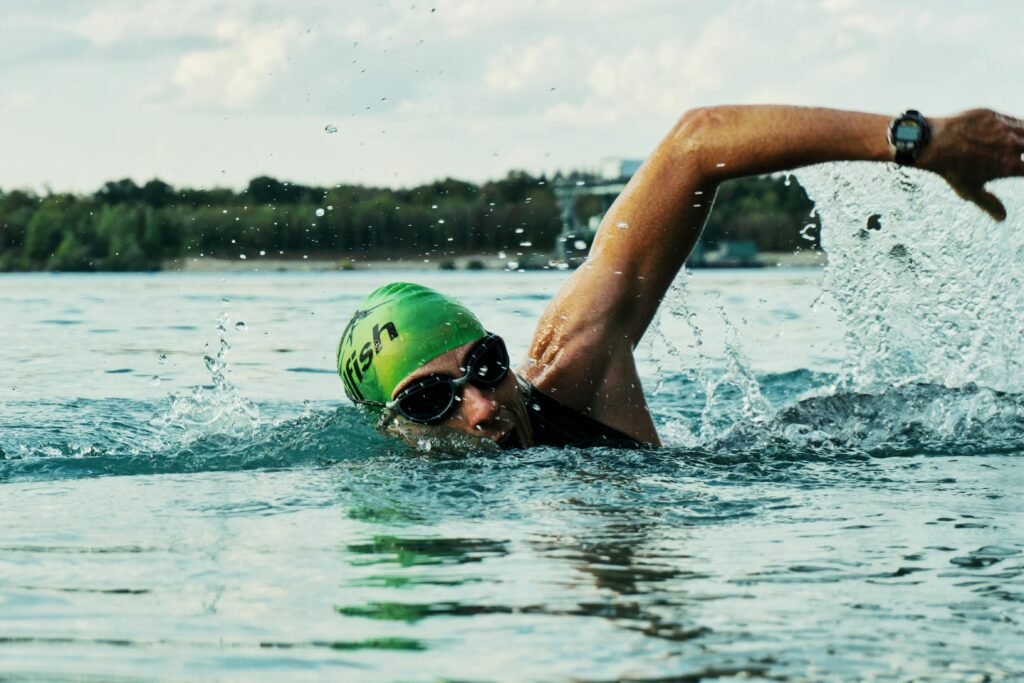
2.3 Tech-Driven / Personalized Challenge
What it is: Using apps, wearables, or tech platforms that deliver a challenge via personalised tracking, gamification, adaptive workouts.
Why it matters in 2025: Technology is more advanced, and helps tailor to your level, track progress more precisely, add nudges. For example, research found that gamification via wearables improved activity for some users.
Who it’s good for: Intermediate/advanced exercisers, tech-savvy people, or anyone wanting something that can adapt and track.
How to get started: Choose an app with good reviews (see “Challenges” app above). Set your wearable/smartwatch goals, link to group/team if you like competition.
Real-life review / caveats: Some users felt novelty wore off:
“I’m skeptical … It’s easy to get excited for a week, but for me, the novelty wore off fast.” (Reddit)
Also, one review noted bugs or point syncing issues. (JustUseApp)
So tech helps—but it’s not a substitute for consistency and form.
Tip: Use the tech as a tool, not the entire motivation engine. Set your own baseline, track form/feel, and don’t ignore what your body’s telling you.
2.4 Low-Impact / Recovery-Oriented Challenge
What it is: Instead of maxing out intensity, this challenge focuses on sustainable movement: walking every day, mobility routines, stretching, maybe 20-30 min of activity daily.
Why it’s relevant: Lots of people want sustainable fitness, joint-friendly routines, or are coming back from injury or older age. A review of the “Japanese walking method” found walking interval formats were accessible and effective. (Marie Claire UK)
Who it’s good for: Beginners, older adults, those with injuries or joint concerns, people looking for habit formation rather than hardcore intensity.
How to get started: Set a daily step/walk goal, commit to a consistent time (e.g., 30 minutes after lunch), add mobility/stretching 2-3 times a week.
Real-life review / caveat: Many assume “low impact” means “easy”, but consistency is still key. Also, you might see slower visible “results” (weight loss, muscle gain) compared to high-intensity, so patience is required.
Tip: Track how you feel (energy, mobility, mood) not just visible/fast results. This kind of challenge often builds the foundation for longevity, not quick fixes.
2.5 Competitive Events / Distance Challenges
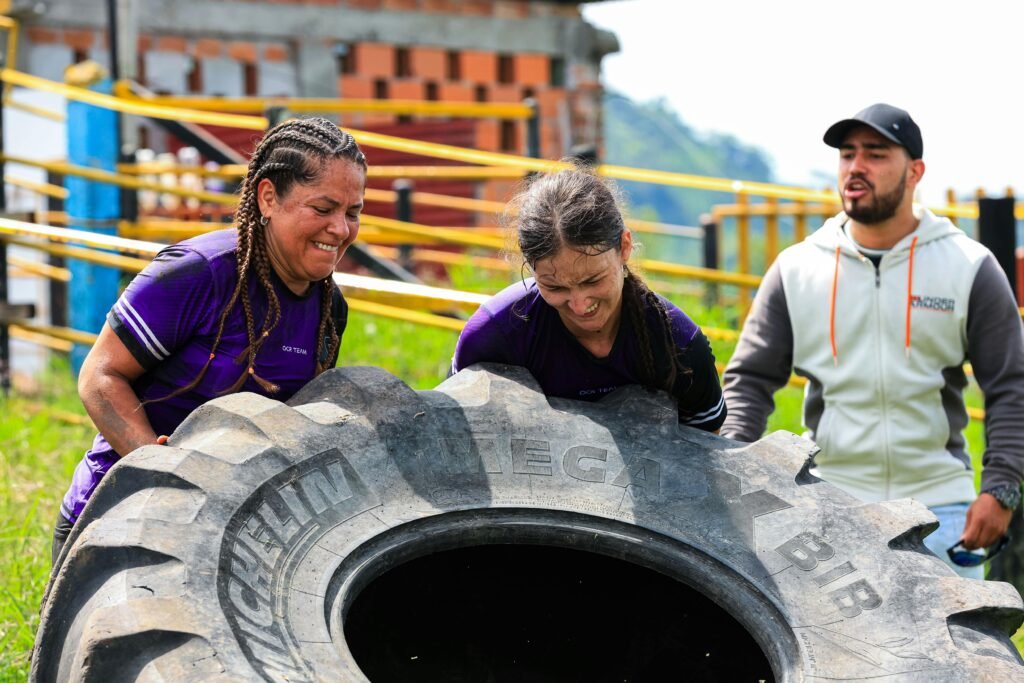
What it is: Training for a bigger-goal event: a 5K/10K race, obstacle course (like Tough Mudder), or hybrid events combining running, strength, etc. (Wikipedia)
Why it’s trending: People like big milestones, community events, the “finish-line” feeling.
Who it’s good for: Experienced exercisers, those who thrive on goal-setting and event preparation.
How to get started: Pick your event, find a realistic training schedule (8-12 weeks typically), include strength/mobility in addition to your main prep.
Real-life review / caveat: Training for events often requires time, recovery, and can lead to injuries if you go full throttle too fast. Also, once the event is over — what then? Some participants “come down” after the high and lose momentum. Click here for my favorite shoes to run a 5k in.
One reviewer said of short-term gym challenges: “you end up worse off” for the business and for client sustainability. (BarBend)
So you’ll want to plan what comes after the event.
Tip: Don’t skip rest/support steps. Build recovery, cross-training, and most importantly: plan for your next step after the event rather than just “finish and stop”.
3. How to Choose the Right Challenge for You
Now that you’ve seen formats, here’s how to pick one that matches you—and avoid the pitfalls.
- Assess your current fitness level & schedule
- Are you a beginner, intermediate, advanced?
- How much time can you realistically commit each day/week?
- Do you have any injuries or health conditions to take into account?
- Define your goal
- Is it habit-formation, weight loss, strength gain, mobility improvement, event preparation?
- Avoid choosing a challenge just because it’s trending if it doesn’t align with your goal.
- Match the format to your style and life
- If you thrive on groups and competition → go for community/virtual challenge.
- If you prefer solo and steady improvement → classic or low-impact challenge.
- If you like tech + data → app or wearable-based challenge.
- Check sustainability & recovery
- Does the challenge allow for off days or modifications?
- What happens after the challenge ends? Is there a maintenance plan?
- Are you comfortable with the diet/commitment required?
- Read real-world reviews & watch for red flags
- Are people saying “I couldn’t keep up”, “I got injured”, “it cost more than I expected”? For example:
“They are almost never worth it in my opinion… only people already hardcore gym-goers would complete these kinds of challenges.” (Reddit) - On the other hand:
“I did a few challenges … it really kicked my butt … now I’m way more active.” (Reddit) - Look for the fit for you, not for social media hype.
- Are people saying “I couldn’t keep up”, “I got injured”, “it cost more than I expected”? For example:
- Set up for success
- Use tracking (log workouts, photos, measurements)
- Build in rest days or lighter days
- Ensure proper warm-ups, form, and listen to your body
- Avoid going from 0 to 100 too fast — incremental progression is key
- After the challenge: plan what comes next so you don’t fall back into old habits

4. Sample 4-Week Challenge Plan (Template)
Here’s a flexible template you can plug into whichever format you choose (classic, tech-driven, community, low impact). Adjust intensity/time based on your fitness level.
Week 1: Baseline + Habit Formation
- Day 1: Assessment (what you can currently do).
- Days 2-4: Moderate level (you feel challenged but comfortable).
- Day 5: Active recovery or mobility/stretch day.
- Days 6-7: Slightly increased volume/effort.
- Check in: How did you feel? What barriers emerged?
Week 2: Gradual Elevation
- Increase volume or intensity by ~10 %.
- Add a new component (e.g., extra mobility time, extra rep, slightly heavier weight).
- Include 1 rest/light day.
- Check-in: Sleep, energy, soreness, schedule conflicts.
Week 3: Peak Week (depending on format)
- Highest workload of the 4 weeks (volume/intensity).
- Maintain one recovery day.
- Check-in: Are you managing fatigue? Do you need to scale back?
Week 4: Review & Maintenance Switch
- Reduce intensity/volume by ~20-30% compared to Week 3 (deload).
- Reflect: What improved (endurance, strength, mobility, consistency)?
- Plan next phase: sustain the habit (less frequent but consistent), or move to next challenge/event.
- Celebrate progress (even if small).
- Explicitly commit: “I will continue with X sessions/week for next 8 weeks.”
5. Success Stories & Reality Check
What works:
- Accountability and group support are consistently highlighted by people who succeed.
- Simple, consistent routines often beat “extreme bursts” for long-term habit.
- When fitness challenges are approached as a step in a longer journey (not just “finish then stop”), they tend to have lasting impact.
What doesn’t:
- Overly rigid or “all-or-nothing” challenges often lead to burnout, injury, or rebound. For example, the 75 Hard challenge has been criticized for being too extreme and hard to maintain. (People.com)
- Challenges that ignore individual variation (injuries, schedule, baseline fitness) tend to result in drop-outs or frustration.
- Thinking of a challenge as a quick fix rather than part of an ongoing lifestyle. One writer admitted:
“I have failed more fitness challenges than I have succeeded at.” (Medium)
So it’s important to go in with realistic expectations: you’ll likely feel discomfort, you might miss days, you’ll need to moderate and recover. That’s normal.

Conclusion
Fitness challenges can be a great tool in 2025 — to build momentum, form habits, push through a plateau, or prep for something big. But they’re not a guarantee. The key is choosing one that fits you, being aware of the trade-offs, and planning for what comes after.
If I had to summarise:
- Pick the format that fits your life and level.
- Use a challenge to build a habit, don’t expect overnight transformation.
- Monitor how your body is responding, stay realistic.
• • Think ahead: after the challenge ends, what’s your next step?